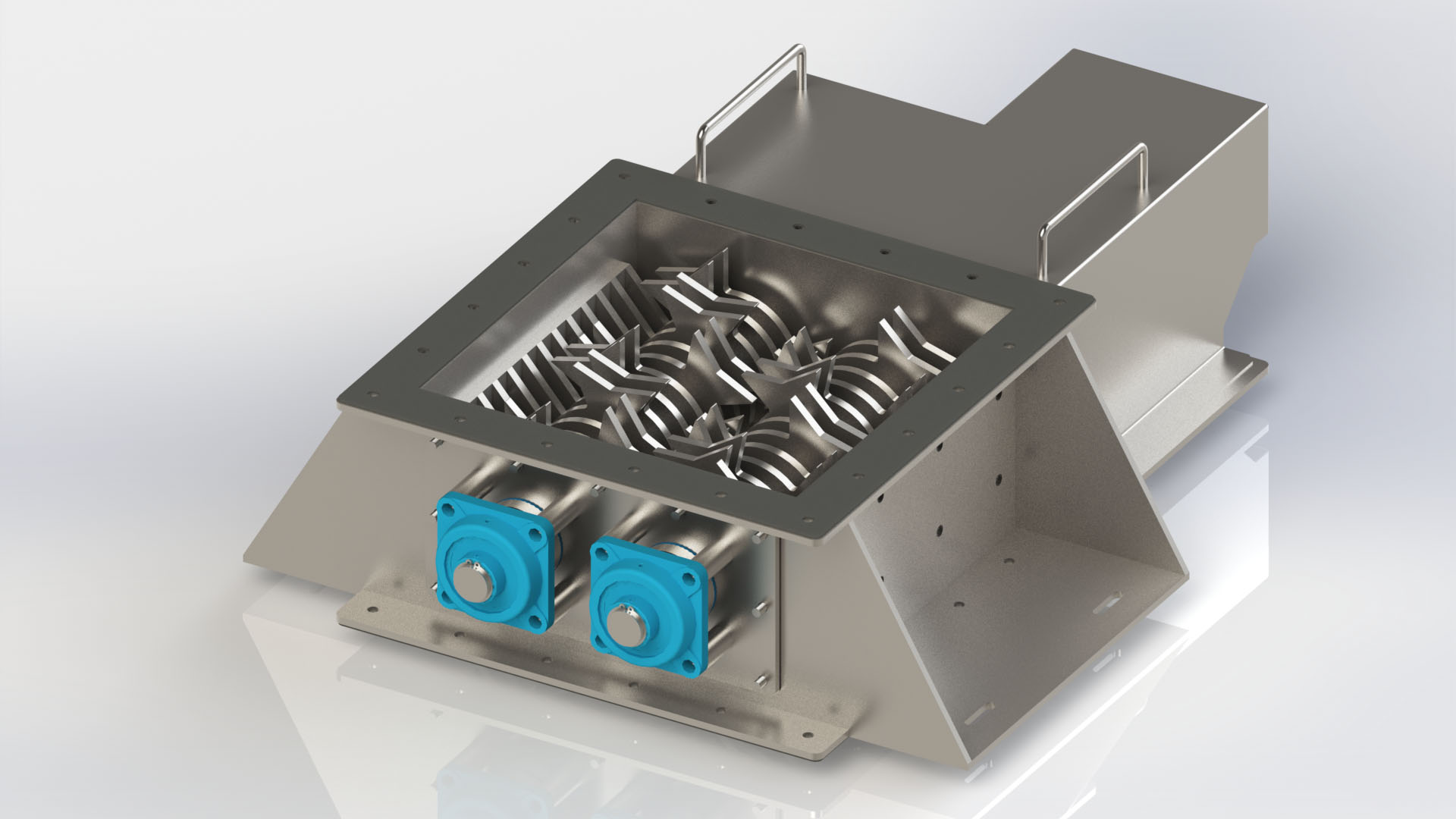
A hygienic size-reduction system, a lump breaker is a machine used to break up compacted food products
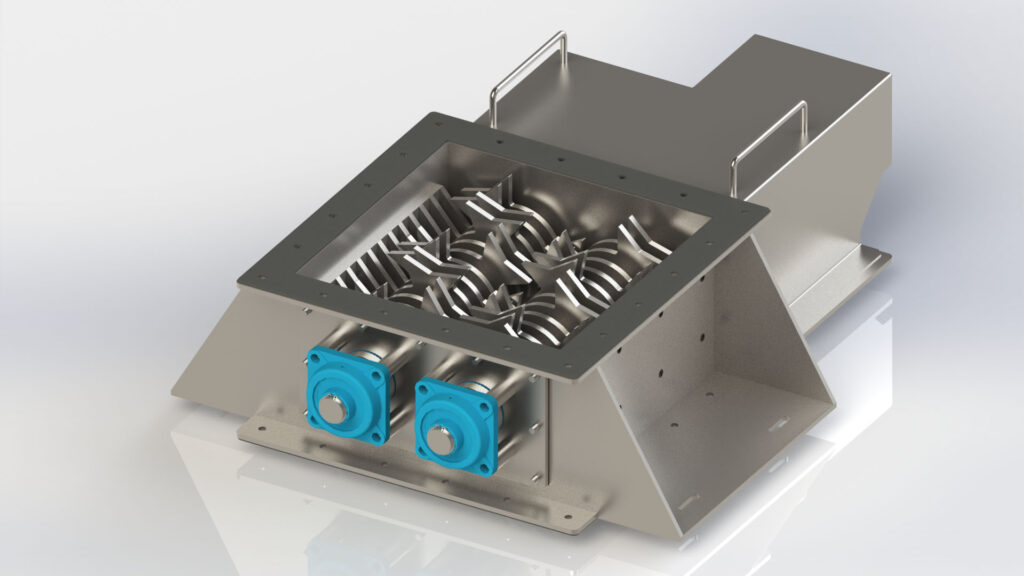
A hygienic size-reduction system, a lump breaker is a machine used to break up compacted, caked, or agglomerated food products into a free-flowing, manageable form suitable for further processing and packaging.
Lump Breaker is designed specifically to break up material lumps that have formed during storage, transportation, or handling. It is placed under silos, hoppers, sack-tip stations, or FIBC discharge points to maintain consistent product flow to conveyors, feeders, mixers, or packaging equipment, and to prevent disruption of the downstream plant caused by blockages and surges.
The Rospen lump breaker has 2 horizontal shafts with chopping blades which rotate through a fixed screen , crushing any excess lumps of product as the product flows through the machine.
In food applications, a Lump Breaker is manufactured from stainless steel, with smooth, crevice-free contact surfaces and hygienic Rospen Ultra Seals to prevent product leakage. Rotors are easily removed, and the screens can be replaced without tools, facilitating quick cleaning and inspection between product changeovers and encouraging strict hygiene and allergen control procedures.
The compact, robust design also allows the unit to be installed in-line under silos, bag emptying points, or large bag dischargers with minimal impact on headroom. Single or twin-shaft designs, along with choices of rotor shapes and profiles, and fixed or variable-speed drives, provide a wide range of options to meet the needs of different products, capacities, and required particle sizes.
Lump breakers are commonly used to condition ingredients like sugar, salt, starches, cocoa, milk powders, and bakery mixes prior to mixing, conveying, or packing. They are also best suited for recovering off-spec or rework products, such as biscuits or agglomerated granules, and returning them to the controlled size range for reuse in the process.
The Lump Breaker enhances the coefficient of dosing, eliminates blockages, and facilitates a consistent, predictable feeding stream to downstream equipment by mashing lumps and returning the feed to a liquid state. This minimises unexpected downtime, reduces manual handling, and helps ensure the quality of every product is consistent, no matter which batch it belongs to.
Typical flow rates are between 0 and 50m^3/hr.
We’re here to help. Whether you’re looking for a tailored solution, technical advice, or a project quotation, our team is ready to assist. A member of our team will get back to you to discuss your requirements in more detail.