
A pneumatic conveying system to provide dependable, dust-tight bulk solid transfer throughout your plant.
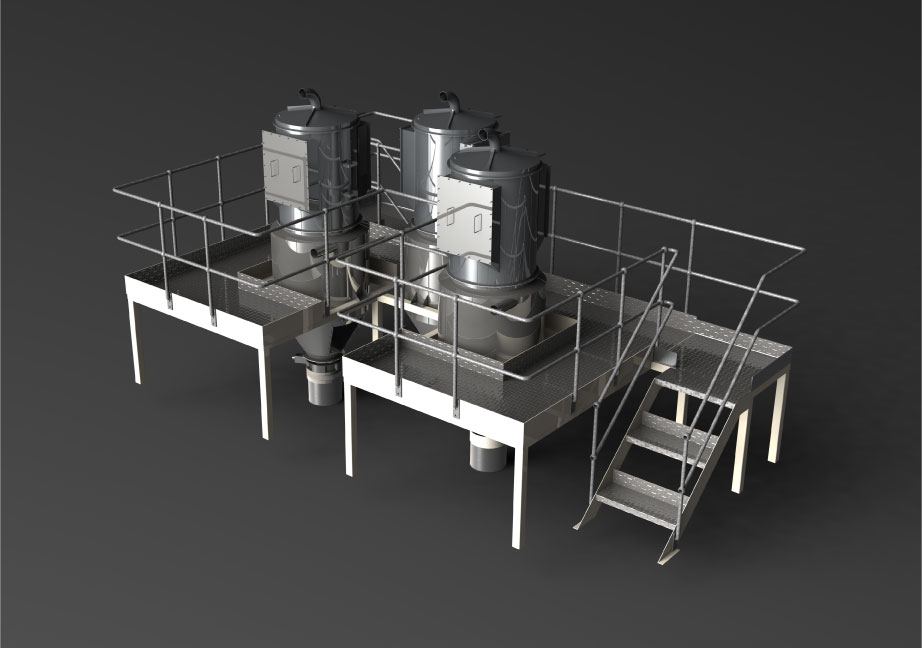
Positive pressure conveying systems employ high-efficiency blowers, rotary valves, and sound pipeline design to transport materials without difficulty through silos, bag tipping stations, or bulk bag unloaders into storage vessels, weigh hoppers, and mixers. This contained system ensures the quality of the product, reduces dust generation and makes your processing space clean and safe.
In a positive-pressure pneumatic conveying system, compressed air pushes product from the feed point into the pipeline and to its destination at a pressure higher than atmospheric pressure. The material is introduced into the line via a rotary valve or similar airlock device, then carried in the air stream to a filter receiver or cyclone, where it is separated from the conveying air.
These systems are ideal for free‑flowing to moderately difficult powders, granules, pellets, and flaked products in industries such as food, chemical, plastics, minerals, and building materials.
A typical system comprises a blower package, air preparation, a rotary valve airlock at the feed point, a conveying pipeline with bends and supports, and a filter receiver or cyclone with a discharge valve at the destination. Controls integrate with upstream and downstream equipment to maintain conveying pressure, airflow, and product feed rate within defined limits.
|
Aspect |
Positive pressure conveying |
Vacuum conveying |
|
Driving force |
Compressed air pushes material from feed end at above‑atmospheric pressure. |
Vacuum source pulls material toward the receiving vessel at below‑atmospheric pressure. |
|
Typical duty |
Medium distances, higher throughputs, multiple destinations. |
Shorter distances, multiple feed points, high containment at source. |
|
Typical uses |
Transfer from silos or bulk bag unloaders to storage, weighing and mixing. |
Direct pickup from multiple machine outlets or collection points. |
We’re here to help. Whether you’re looking for a tailored solution, technical advice, or a project quotation, our team is ready to assist. A member of our team will get back to you to discuss your requirements in more detail.